From Backend Engineering to Power Platform: Building the Right Mental Model
Lately I’ve been spending time helping someone with a strong .NET and Azure background build a fundamental understanding of the Power Platform, Dataverse, and Dynamics 365 CE apps and more.
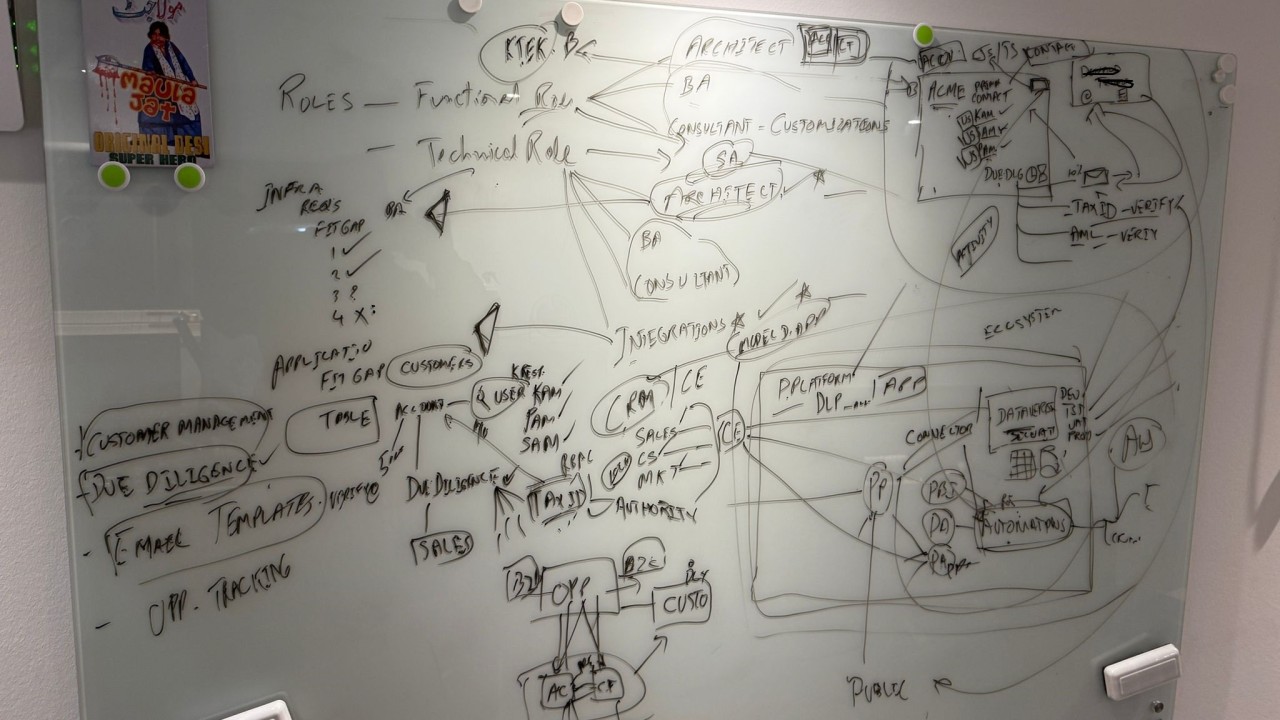
Not through formal training or certifications — but through conversations, whiteboards, and real scenarios.
What really stands out is that Power Platform only clicks when you stop seeing it as “low-code tooling” and start understanding why it exists, what problems it is meant to solve, and where it fits in enterprise architectures.
This becomes especially clear when you look at real B2B use cases, such as customer due-diligence.
In a typical B2B onboarding flow, you’re not just storing customer data. You’re managing:
- Long-running due-diligence processes
- Multiple stakeholders and approval steps
- External checks (tax ID, AML, sanctions, etc.)
- Clear auditability and role-based access
This is where Dataverse and Dynamics 365 CE shine — as the system that orchestrates people, process, and decisions — while securely integrating with external and internal systems.
Looking at this through job roles adds another important layer.
A Power Platform / D365 CE developer isn’t just building forms and flows. A technical consultant translates complex due-diligence processes into platform-native behavior. And a solution architect must think even broader — covering Dataverse design, integration patterns, identity with Microsoft Entra ID, and infrastructure pluggability (private endpoints, VPNs, network isolation). Bottom line: there are a number of pieces available in the whole Ecosystem, one needs to understand what goes where, why and how to get most optimal results per need.
Architect-level thinking includes decisions like:
- What due-diligence data belongs in Dataverse vs external systems
- How external verification services are invoked securely
- How access is controlled across roles during the onboarding lifecycle
- And how the platform fits into enterprise security and network boundaries
For experienced backend engineers, the challenge isn’t learning the tools — it’s understanding where responsibilities sit, what problems the platform is best suited for, and how roles differ across developer, consultant, and architect paths.
Seeing that “aha” moment — where Power Platform stops being confusing and starts making sense in terms of real B2B use cases and real job responsibilities — is genuinely rewarding.
If you’re coming from a traditional engineering background and considering roles around Power Platform or Dynamics 365, my advice is simple: don’t start with features — start with use cases, roles, boundaries, and security context.
That changes everything.